Uncovering the Origins of Iconic Pokemon Memes
In the vast landscape of internet culture, few franchises hold as much meme-generating power as Pokémon. From its humble beginnings as a pair of Game Boy games in the mid-nineties to a global multimedia phenomenon spanning anime, trading card games, movies, and mobile apps, Pokémon has ingrained itself into the collective consciousness. With such a rich history and an enormous cast of characters, it's no surprise that Pokemon Memes have become a cornerstone of online humor, offering endless opportunities for relatable jokes, clever parodies, and nostalgic callbacks. But where do these viral sensations truly begin? This article dives deep into the genesis of some of the most iconic Pokémon memes, exploring their original context and how they evolved into the internet staples we know and love today.
The Enduring Power of Pokemon Memes in Internet Culture
The ubiquity of Pokemon Memes isn't accidental; it's a testament to the franchise's unique blend of universal themes and specific, often quirky, details. Pokémon resonates with multiple generations, evoking a strong sense of nostalgia for those who grew up with the original Red and Blue versions, while continually attracting new fans with each passing generation. This broad appeal means that a vast audience understands the inherent references, making jokes land harder and spread faster.
The franchise provides a fertile ground for meme creation:
- Relatable Situations: Battling, training, exploring, and even the simple act of choosing a starter Pokémon are experiences many can identify with.
- Distinctive Visuals: The unique designs of hundreds of Pokémon, coupled with memorable animation frames from the anime, offer endless visual fodder.
- Iconic Phrases: Slogans like "Gotta Catch 'Em All!" or battle messages like "It's Super Effective!" are instantly recognizable and ripe for parody.
- Character Personalities: Ash Ketchum's endless optimism, Brock's unrequited crushes, or Team Rocket's persistent failures provide comedic templates.
Understanding why Pokemon Memes Still Dominate Internet Culture helps us appreciate the intricate process of how specific moments transition from the game or anime into cultural touchstones. Let's peel back the layers and uncover the fascinating origins of some true meme legends.
Iconic Pokemon Memes and Their Surprising Genesis
The internet is a melting pot of creativity, where a single frame or line of dialogue can explode into a global phenomenon. Here, we investigate the origins of several key Pokemon Memes that have captivated millions.
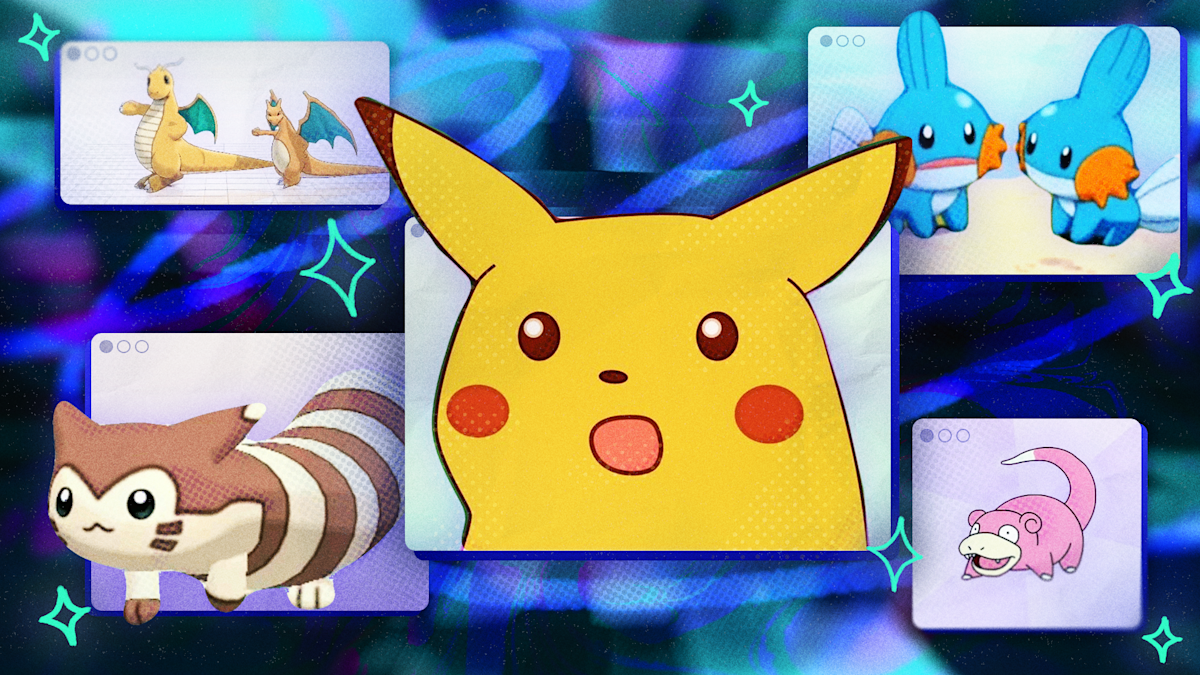
The Surprised Pikachu Face
Perhaps one of the most recognizable and versatile reaction memes, the Surprised Pikachu Face perfectly encapsulates a feeling of shock, disbelief, or feigned ignorance when faced with an obvious outcome. Its widespread use has cemented it as a modern internet classic.
- Origin: This meme hails from the Pokémon the Series: Sun & Moon anime. Specifically, it's a screenshot from episode 10, titled "A Battle of Mega-Mega Proportions!". In the scene, Ash and his classmates are observing a training battle between Kiawe's Turtonator and his grandfather's Alolan Marowak. Pikachu, observing the intense fire battle, reacts with this now-iconic expression after Turtonator's shell is heavily damaged. The specific frame captures Pikachu with wide, slightly agape eyes and an open mouth, conveying a perfect blend of surprise and bewilderment.
- Cultural Impact: The Surprised Pikachu meme exploded in late 2018 and has remained popular ever since. Its versatility lies in its ability to be applied to almost any situation where someone is "surprised" by something that should have been obvious. For example, a meme might show someone complaining about getting fat after eating junk food, with the Surprised Pikachu underneath. It's a visual shorthand for "Well, what did you expect?" and perfectly captures ironic or sarcastic surprise.
Slowpoke (The Oblivious One)
Slowpoke, the Water/Psychic-type Pokémon from the first generation, is a walking, talking (or rather, slowly walking and rarely talking) meme in itself. Its inherent characteristics have made it the mascot for oblivious reactions, late updates, and general slowness.
- Origin: Slowpoke's meme status is less about a single moment and more about its consistent portrayal throughout the Pokémon franchise. Its Pokédex entries often describe its incredibly slow reaction time and dim-witted nature. For instance, in Pokémon Yellow, its entry states, "Incredibly slow and dopey. It takes a whole day for it to notice when its tail has been bitten." The anime and games frequently depict Slowpoke in situations where it takes an inordinate amount of time to process information or react to stimuli. This intrinsic slowness and perceived obliviousness became a perfect analogy for internet users who are behind on trends or unaware of current events.
- Cultural Impact: The Slowpoke meme is used to highlight someone being incredibly late to understand a joke, a piece of news, or a viral trend. For example, a picture of Slowpoke might be captioned, "Did you hear about this new 'Harlem Shake' dance?" years after its peak popularity. It's a gentle jab at those who are out of the loop, embodying the idea that some people take a long, long time to catch on.
"It's Super Effective!"
This phrase, deeply embedded in the mechanics of Pokémon battles, has transcended its gaming origins to become a powerful metaphor for impactful actions in real life.
- Origin: "It's Super Effective!" is a core gameplay notification from the Pokémon video games. Whenever a Pokémon uses an attack that is type-advantageous against its opponent (e.g., a Water-type move against a Fire-type Pokémon), this message appears on screen, signifying extra damage dealt. Conversely, "It's Not Very Effective..." appears for type-disadvantageous attacks. These messages are fundamental to understanding Pokémon's strategic depth.
- Cultural Impact: The phrase itself, often accompanied by screenshots from the games, is widely used to comment on situations where an action or statement has a particularly strong and positive (or negative, if "not very effective") impact. For instance, if someone tells a perfectly timed joke that gets a huge laugh, a friend might quip, "It's Super Effective!" Or, if a perfectly reasonable argument falls on deaf ears, one might sigh, "It's Not Very Effective..." It’s a versatile way to quantify the success or failure of an action in a humorous and instantly understandable manner.
"Who's That Pokémon?"
An interactive segment from the original Pokémon anime, this short quiz became a meta-joke and a template for absurd humor.
- Origin: This meme originated from the "Who's That Pokémon?" segment that typically appeared halfway through early episodes of the Pokémon anime. During this interstitial, a silhouette of a Pokémon would appear, and viewers were challenged to guess its identity. After a commercial break, the silhouette would disappear to reveal the Pokémon, accompanied by its name. The segment was designed as a fun, educational quiz for children watching the show.
- Cultural Impact: The meme primarily took off by subverting the original premise. Instead of guessing a genuinely difficult Pokémon, memers would often present a clearly identifiable Pokémon (like Pikachu), a completely unrelated object or person, or even a bizarrely distorted image, and still use the "Who's That Pokémon?" caption. The humor comes from the obviousness of the answer, the absurdity of the question, or the unexpected reveal. It parodies the simplicity of the original segment while highlighting the internet's love for ironic humor and unexpected twists.
Decoding the Nuances: How Context Shapes Pokemon Memes
While understanding the direct origin of a meme is crucial, fully appreciating Pokemon Memes also requires an awareness of how their meaning can shift and evolve within different contexts. A meme’s journey from a specific game frame or anime scene to a general internet reaction often involves a process of decontextualization and recontextualization. The 'Surprised Pikachu' face, for example, gained its power not just from Pikachu's expression in that one episode, but from its applicability to countless relatable situations of ironic surprise.
The beauty of these memes lies in their elasticity. A joke about Slowpoke being slow can be a lighthearted jab at a friend, or a commentary on slow government policies. An "It's Super Effective!" can celebrate a victory or mock a failed attempt. The collective understanding and interpretation of the internet community are what breathe continued life and new layers of meaning into these digital artifacts. For a deeper dive into the meanings behind these viral sensations, be sure to check out Decode the Fun: Your Guide to Pokemon Meme Meanings.
Practical Tip: When encountering a new Pokémon meme, try to trace its origin. Knowing the original scene, dialogue, or character trait can unlock deeper layers of humor and provide a richer appreciation for its current usage. Tools like Know Your Meme are excellent resources for this kind of investigative work.
The Role of Community and Creativity in Meme Proliferation
The creation of Pokemon Memes is a profoundly communal act. While a single frame might spark a meme, it is the collective creativity of millions of internet users that fuels its proliferation and evolution. Social media platforms, forums, image boards, and dedicated fan communities act as incubators where memes are shared, adapted, and remixed at lightning speed.
- Adaptation: Users take a core idea – like the Surprised Pikachu – and adapt it to an endless array of personal experiences and current events. This constant reinterpretation keeps the meme fresh and relevant.
- Remixing: Memes often combine with other memes, pop culture references, or inside jokes, creating hybrid forms that speak to increasingly niche audiences while still retaining their core appeal.
- Speed of Spread: The sheer volume of Pokémon fans worldwide ensures that new memes or new takes on old memes can spread globally within hours, becoming part of the daily online lexicon.
This collaborative, decentralized approach to content creation highlights the democratic nature of internet culture. Anyone with an idea and a basic image editor can contribute to the meme ecosystem, and if their creation resonates, it can achieve viral status. The staying power of Pokemon Memes is a testament to the enduring love for the franchise and the boundless ingenuity of its fanbase.
Actionable Advice: To identify emerging Pokemon Memes or appreciate their evolution, immerse yourself in relevant online communities. Follow Pokémon fan accounts on Twitter, Instagram, Reddit, and TikTok. Pay attention to recurring visual gags or catchphrases. Often, the early adopters in these communities are the ones shaping the next big viral sensation, allowing you to witness the birth and growth of meme culture firsthand.
Conclusion
The journey from a specific scene in an anime or a line of code in a game to a globally recognized internet meme is a fascinating one, deeply rooted in shared experiences, collective creativity, and the power of digital communication. Pokemon Memes are more than just jokes; they are cultural artifacts that reflect our reactions to the world, our shared nostalgia, and our collective humor. By understanding their origins, whether it's Pikachu's wide-eyed shock, Slowpoke's endearing obliviousness, the strategic impact of "Super Effective," or the playful guessing game of "Who's That Pokémon?", we gain a deeper appreciation for the intricate tapestry of internet culture and the enduring legacy of the Pokémon franchise.